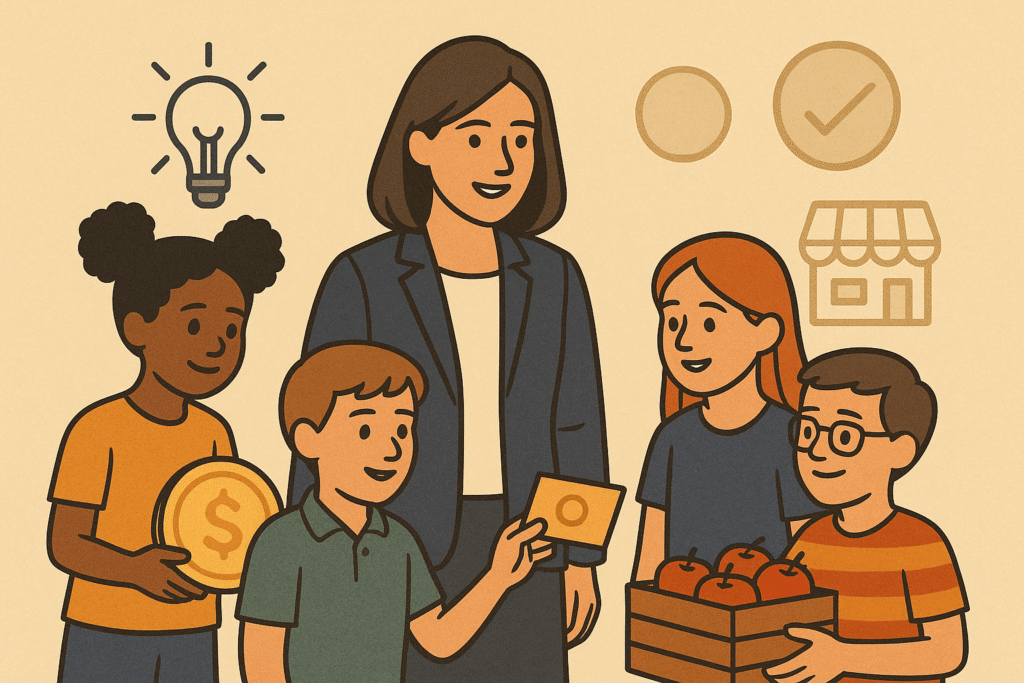
Introducing children to the fundamentals of business at an early age can spark creativity, problem-solving, and confidence that will benefit them throughout life. While the concept of “business” may sound too grown-up for elementary students, children in grades K–5 are naturally curious and eager to learn how the world around them works. With the right approach, business basics can be made fun, engaging, and highly educational.
Why Teach Business Basics in Elementary School?
- Builds Financial Literacy Early – Kids learn about money, saving, spending, and the value of work.
- Encourages Problem-Solving – Starting a pretend shop or project teaches them to identify needs and create solutions.
- Boosts Confidence – Pitching an idea or selling a craft helps children develop communication and leadership skills.
- Supports Real-World Learning – Business basics connect math, reading, and social studies to everyday life.
By weaving these lessons into everyday activities, parents and teachers can give kids the foundation for financial responsibility and entrepreneurial thinking.
Core Business Concepts for K–5 Students
Here are some age-appropriate business basics to introduce:
- Needs vs. Wants
Help kids distinguish between what people need (food, shelter, clothing) and what they want (toys, video games, treats). This builds decision-making skills. - Money Basics
Teach how money is earned, saved, and spent. Simple games like “store” or “bank” can make this interactive. - Goods and Services
Explain that goods are things people buy (like books or snacks) while services are actions people pay for (like haircuts or tutoring). - Entrepreneurship
Encourage kids to think of small business ideas: lemonade stands, craft sales, or even classroom jobs. This develops creativity and initiative. - Teamwork and Roles
In group projects, assign business-style roles (manager, marketer, cashier) to show how teamwork drives success.
Fun Activities for Teachers and Parents
Here are classroom and at-home activities that make business learning exciting:
- Classroom Market Day: Students create goods (art, crafts, snacks) and “sell” them with play money.
- Lemonade Stand Challenge: At home, children run a small stand and learn about cost, pricing, and profit.
- Role-Play Jobs: Assign students different roles in a pretend company to teach responsibility and cooperation.
- Budgeting Games: Give kids “money” to budget for classroom supplies or fun rewards.
These hands-on experiences transform abstract ideas into real-life lessons.
Tips for Parents and Teachers
- Start simple and build gradually—focus on one concept at a time.
- Use stories, children’s books, or cartoons to explain big ideas.
- Praise creativity and problem-solving over profit—emphasize learning.
- Relate business to everyday experiences (grocery shopping, chores, allowance).
Long-Term Benefits
Children who learn business basics early are better prepared for:
- Smart Money Habits in their teen and adult years.
- Entrepreneurial Thinking for future careers.
- Confidence in Leadership through public speaking and teamwork.
By empowering kids to understand business, we’re equipping them to make thoughtful choices, work with others, and dream big.
Final Thoughts
Teaching business basics in grades K–5 is less about spreadsheets and more about sparking curiosity. Parents and teachers can create playful, real-world opportunities that turn everyday experiences into powerful life lessons. The earlier children see themselves as problem-solvers and creators, the more confident they’ll be in shaping their futures.